Overview
Student protests in Bangladesh have grown into a major anti-government movement, leading to Prime Minister Sheikh Hasina’s resignation. Nearly 100 people have died in clashes, and the military has imposed a curfew and blocked internet access. Some believe that Pakistan’s army or ISI may be involved in the unrest.
What’s Happening?
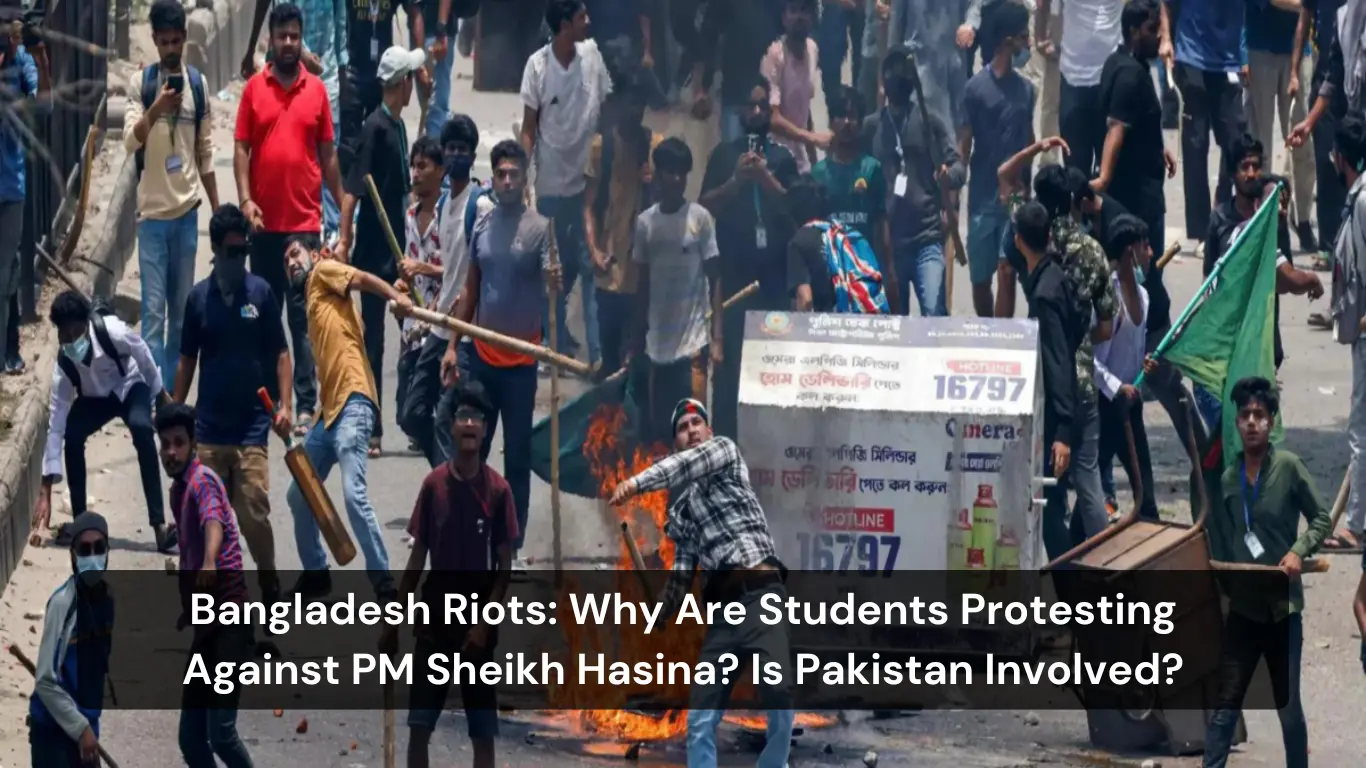
What started as peaceful student protests against a quota system for government jobs has turned into a large-scale movement against Prime Minister Sheikh Hasina and her ruling Awami League party. According to reports, Hasina resigned and left the country by army helicopter after protesters planned a march to Dhaka. Over the weekend, violence led to many deaths. To control the situation, the military imposed an indefinite curfew and cut off internet access.
Why Are Students Protesting?
The protests began with students calling for changes to the civil service quota system, which they felt unfairly favored supporters of Hasina’s party. The protests expanded as students expressed frustration with Hasina’s government, accusing it of being autocratic and suppressing dissent. Despite closing schools and universities, the unrest continued.
A Supreme Court ruling against reintroducing job quotas didn’t fully satisfy the protesters, who want all job reservations for the children of “freedom fighters” removed. Former army chief General Ikbal Karim Bhuiyan’s criticism and the current army chief’s support for the protesters have further fueled the unrest.
Is Pakistan Involved?
There are reports suggesting that Chattra Shibir, a student group linked to the banned Jamaat-e-Islami party and allegedly supported by Pakistan’s ISI, might be behind the violence. Some sources say that Pakistan’s army and ISI are trying to destabilize Hasina’s government and bring the opposition BNP back to power through protests and violence. The Hasina administration is watching opposition leaders closely, and there are investigations into the involvement of Western-backed NGOs.
Timeline of Key Events
- July 1: Students began blocking roads and railways, demanding changes to the job quota system. They argued that the system benefited Hasina’s supporters. Hasina dismissed the protests, saying students were “wasting their time.”
- July 16: Violence broke out, resulting in six deaths. The government responded by closing schools and universities.
- July 18: Students rejected Hasina’s plea for calm and continued their protests. They chanted “down with the dictator” and set fire to government buildings. An internet blackout and curfew did not stop the clashes, which left at least 32 dead and hundreds injured.
- July 21: The Supreme Court ruled against reintroducing job quotas, but this did not satisfy the protesters who wanted all reservations for “freedom fighters” removed.
- August 4: Clashes between protesters and government supporters resulted in 68 deaths, including 14 police officers. Former army chief General Ikbal Karim Bhuiyan condemned the government’s handling of the situation, while the current army chief stated that the armed forces “always stood by the people.”
- Call for Final Protest: Civil disobedience leaders have called for a “final protest” in Dhaka, increasing tensions with the government.